
This AI Pioneer Just Fired 70% of Her AI Agents
- By Lachlan Colquhoun
- September 06, 2026
 Sol Rashidi has built around 17 AI agents for her own use, but has retired — or fired — about 70% of them.
“It has taken me more time managing the agents than if I were to just do the darn thing myself. It is not a miracle drug,” she says.
“On average, one out of three of your agents will survive.”
When Rashidi sits down to write something, she has a strict rule for herself and also for her children: never use AI for the first draft; do it yourself.
“Your brain is a big, beautiful, magnificent muscle,” she said in a keynote presentation at the recent Cloudera Evolve conference in Singapore.
“What happens when you break a bone, and you put it into a cast? Your muscle shrinks. Our brains are the same way. Use it or lose it.”
Outsourcing first drafts to generative AI, or what she calls “generic AI,” risks eroding the capacity for original thought before it's ever exercised and contributing to “cognitive decline.”
Not only that, but it risks creating a stagnant pool for AI to generate from. If no one did anything original, AI’s output could stop still, for a lack of new information and stimulus.
Handle with care
Such skepticism seems unusual coming from someone like Rashidi, who was in the artificial intelligence trenches since before most executives knew what a large language model was.
Rashidi was part of the IBM team that took Watson to market after its landmark 2011 win over Ken Jennings and Brad Rutter on Jeopardy.
“It was the first time we saw Man Against Machine, and Machine won.”
Since then, Rashidi has overseen more than 200 enterprise AI deployments.
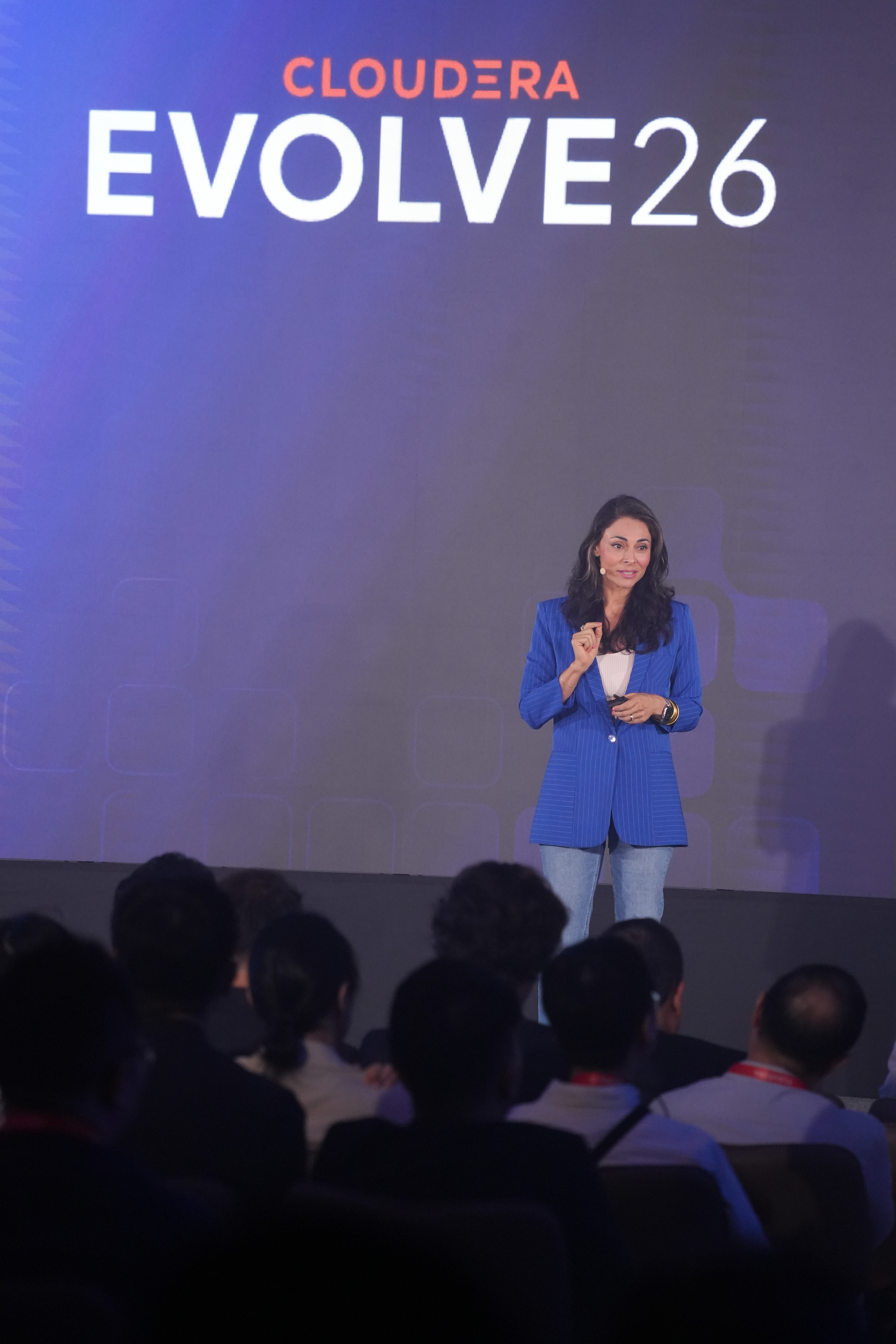
Speaking at Cloudera’s Evolve conference, the AI pioneer and Harvard fellow delivered a blunt warning: most organizations pouring money into AI right now are not getting what they were promised, and many are quietly damaging their own workforce in the process. Her ultimate message is, handle with care.
“You can’t even have a dinner conversation without it,” Rashidi says of AI’s cultural saturation.
“I’m in this space and I’m exhausted.”
Behind the hype, she argues, lies an uncomfortable truth, which is that even with unprecedented access to technology, “our productivity is actually starting to go down because of how overwhelmed we are.”
There is a worrying gap between rising expectations and shrinking talent pools that AI was meant to close, but often hasn’t.
The scale of failure, she says, is routinely underestimated.
“74 to 88% of all artificial intelligence products, POCs, stop, cancel, or fail at the proof-of-concept level,” she says.
“I actually call it perpetual POC purgatory. Not all your babies are going to graduate and go to college.”
Rashidi frames 2026 as a reckoning point.
“2023 was ‘ooh, we have AI.’ 2024 was ‘let’s do some POCs.’ 2025 is when a lot of the Fortune 250 started investing, and then 2026 is where there’s massive expectations around return on investment,” she says.
“The productivity lift that everyone’s being promised, the efficiency lift, well, there are some mixed results.”
Using AI versus doing AI
Central to her diagnosis is a distinction which Rashidi believes most companies miss entirely.
“There is a fundamental difference between using AI and doing AI,” she says.
Handing out thousands of Copilot or Gemini licenses so staff can summarize emails is “using AI.” It might be convenient, but it is not transformative.
“If you're already behind on your to-do list and there’s a deficit, adding another tool to the mix will help expedite things, but it does not get you out of the deficit.”
“Doing AI,” by contrast, means taking a function, decomposing its workflow into tasks, deciding what can be automated and what fundamentally needs to remain human-led, then rebuilding the process from scratch.
“We feel that AI is like another Instagram reel. We want to plug and chug and move along,” says Rashidi.
She sees the same imbalance in how projects are resourced.
Across her deployments, 60 to 70% of a typical project timeline goes to infrastructure, tool selection, and model tuning, leaving little for governance, security, and talent planning.
“The reverse needs to be true,” she argues, pointing out that success isn't measured by launching a proof of concept, but by what happens after.
Governance, and the cognitive cost
Rashidi warns that AI projects need to factor in what she calls “computational morality,” or the practice of embedding not just data and business context into AI systems, but the values of the organization itself.
This is so that when agents act autonomously, they do so within the company's own ethical boundaries. It’s a step, she says, that enterprises frequently skip.
Her ultimate message to enterprises chasing ROI is to stop measuring productivity alone, and assuming that a project has been successful.
“What if you make dumb decisions faster? Is that what you really want to be measuring?” she says, quoting her own comments to the board of a major corporate recently.
“What you should be measuring is effectiveness. Technology does scale efficiencies, but relationships scale the opportunity.”
In her current role as a Harvard fellow, Rashidi is on the road a lot.
“Sometimes when I go home and I ask my kids who are nine and 11, ‘what do you think mommy’s doing?’ they say, ‘well, mommy’s helping and making sure that the world doesn’t get taken over by robots,” she says.
“I like that, and I do think that’s a softer way of landing, and it reminds me of the message: please don’t forget the human-to-human element.”
Image credit: iStockphoto/Alones Creative



Lachlan Colquhoun
Lachlan Colquhoun is the Australia and New Zealand correspondent for CDOTrends and the NextGenConnectivity editor. He remains fascinated with how businesses reinvent themselves through digital technology to solve existing issues and change their business models.